Walking the Camino de Santiago costs about 25 to 50 euros a day per person for most independent pilgrims, and 60 euros or more if you sleep in private rooms every night. A one-week walk from Sarria comes to roughly 180 to 480 euros on the ground, and the full five-week French Way to roughly 1,000 to 2,800 euros, before flights.
Below we break the daily cost into its parts, show three sample budgets, work out totals for the most popular routes and list the extra costs first-timers forget. All prices are in euros, the currency on every Spanish and Portuguese route, and reflect 2026 levels.
What a day on the Camino costs, item by item
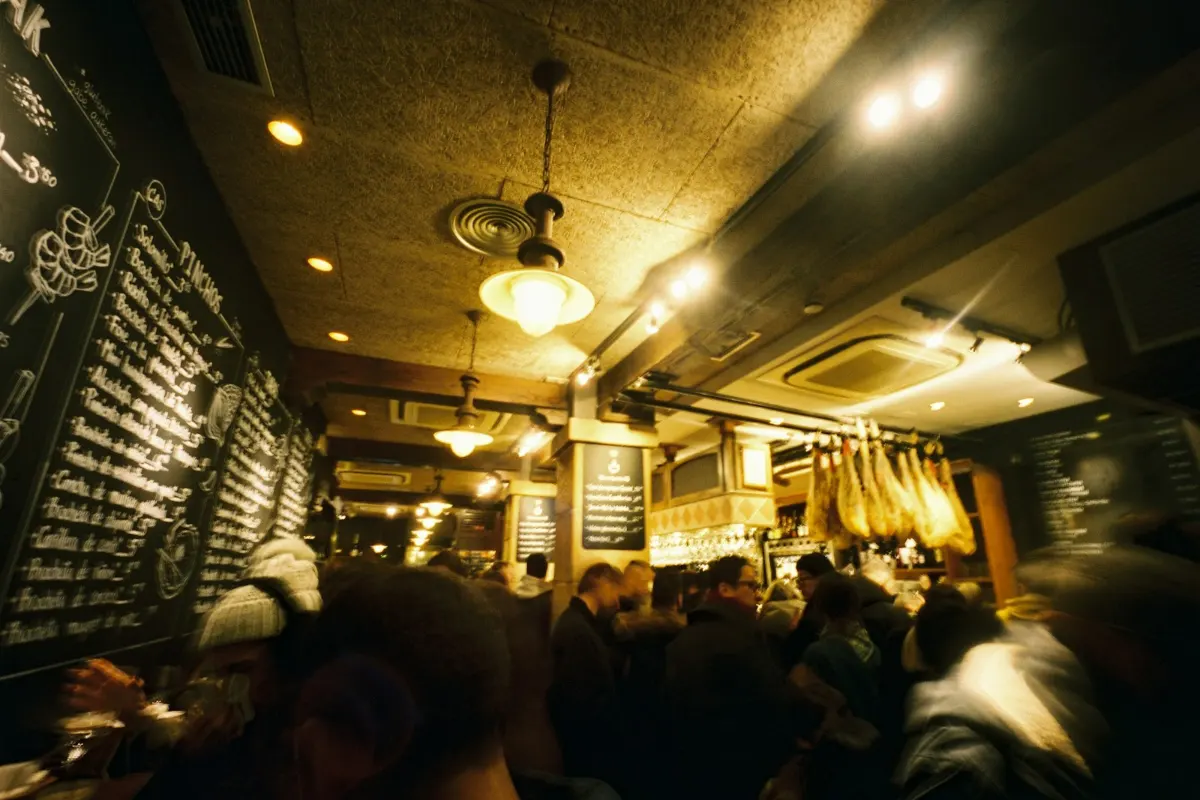
A day on the Camino has four main costs: a bed, three meals, drinks and snacks, and small extras such as laundry. The bed and dinner make up most of the total.
| Item | Typical price |
|---|---|
| Bed in a public albergue in Galicia | 10 euros |
| Bed in a municipal or parish albergue elsewhere | 7 to 14 euros, or a donation |
| Bed in a private albergue | 14 to 25 euros |
| Private room in a hostal or pensión | 35 to 70 euros per room |
| Hotel room | 65 to 180 euros per room |
| Breakfast in a bar (coffee, toast or pastry) | 4 to 7 euros |
| Bocadillo (sandwich) for lunch | 4 to 6 euros |
| Pilgrim menu (menú del peregrino), dinner with wine | 10 to 18 euros |
| Beer or glass of wine in a bar | 2 to 3 euros |
| Washing machine and dryer | about 4 euros to wash, 5 to dry |
| Luggage transfer, one bag, one stage | about 6 to 8 euros |
Accommodation prices follow the 2026 ranges of American Pilgrims on the Camino; food and extras are 2026 averages from Camino budget guides. Prices are higher in Santiago and in the towns of the last 100 km, and lower on quiet routes in the Spanish interior.
Three sample daily budgets
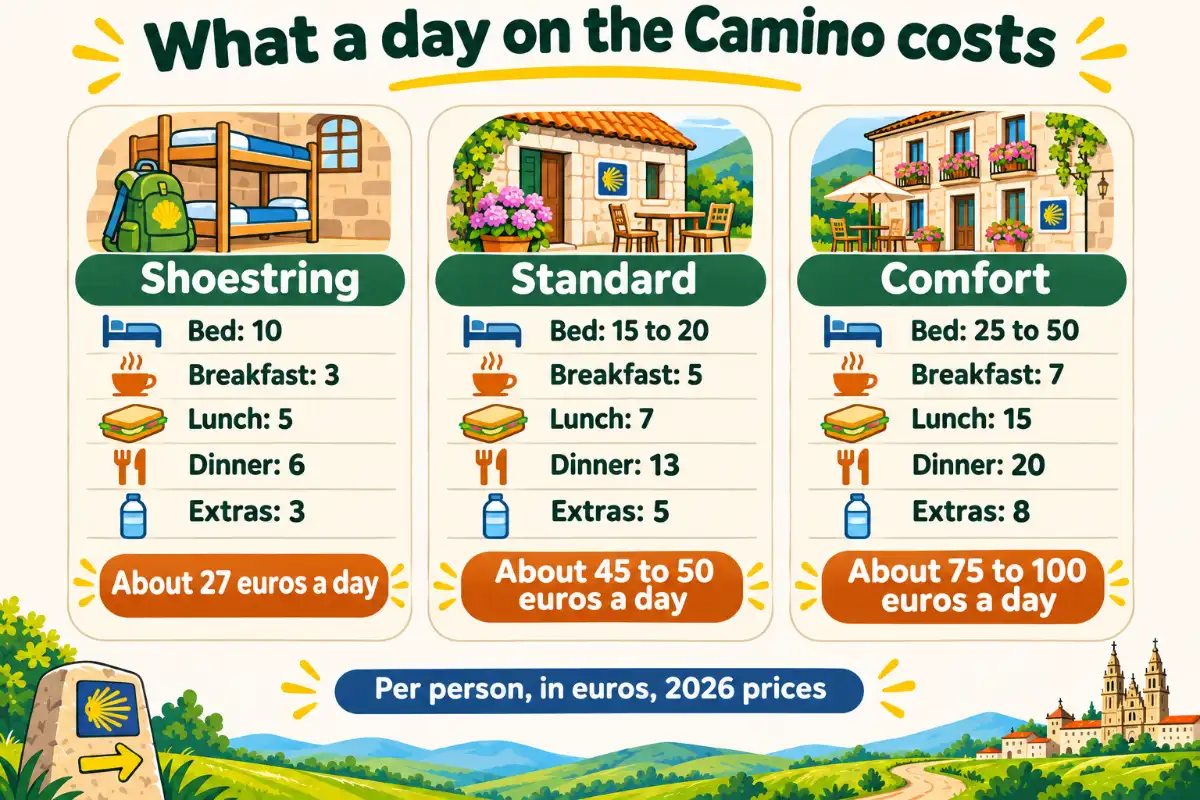
How much you spend each day depends mostly on two choices: dorm or private room, and cooking or eating out. These three sample days show the range for one person.
| Item | Shoestring | Standard | Comfort |
|---|---|---|---|
| Bed | Public albergue: 10 | Private albergue: 15 to 20 | Half a double room in a pensión or hotel: 25 to 50 |
| Breakfast | From the supermarket: 3 | In a bar: 5 | In a bar or hotel: 7 |
| Lunch | Picnic: 5 | Bocadillo and drink: 7 | Lunch menu: 15 |
| Dinner | Cooked in the albergue kitchen: 6 | Pilgrim menu: 13 | Restaurant: 20 |
| Coffee, snacks, extras | 3 | 5 | 8 |
| Total per day | about 27 euros | about 45 to 50 euros | about 75 to 100 euros |
Walking as a couple lowers the cost of private rooms, since you split one room. Solo walkers who want privacy pay the full room price, which is the main reason the comfort budget varies so much.
Pilgrim tip. Two pilgrims sharing a double room in a pensión pay about 18 to 35 euros each, often only a little more than two beds in a private albergue.
How much does the whole Camino cost?
The total cost on the ground is your daily budget multiplied by the number of nights, including the night before you start and at least one night in Santiago. The table below uses the three sample budgets above.
| Route | Nights | Shoestring (about 30 a day) | Standard (about 45 a day) | Comfort (about 80 a day) |
|---|---|---|---|---|
| Sarria to Santiago | 6 | about 180 euros | about 270 euros | about 480 euros |
| Portuguese Way from Porto | 13 | about 390 euros | about 585 euros | about 1,040 euros |
| French Way from Saint-Jean-Pied-de-Port | 35 | about 1,050 euros | about 1,575 euros | about 2,800 euros |
We rounded the shoestring budget up to 30 euros a day to leave room for the occasional private albergue, rest day or meal out. Not sure which route you will walk? Our comparison of Camino routes lists distances and walking days for each.
Costs before you leave home
Many first-timers spend more on preparation than on the walk itself, especially those flying from the US. Plan for four groups of costs before you set off.
- Flights and transfers: to Madrid, Santiago, Porto or Biarritz, plus a train or bus to your starting town and back from Santiago.
- Gear: walking shoes, a 30 to 40 liter backpack, a light sleeping bag or liner and quick-dry clothes. Buy shoes early and walk them in.
- Travel insurance that covers medical care and getting you home. UK travelers can use a GHIC for necessary state healthcare in Spain, but it does not replace insurance.
- Nights in cities before and after the walk, which cost more than nights on the trail.
Our Camino packing list for first-timers shows what you really need, which keeps the gear bill down.
Small extra costs first-timers forget
Good to know. The Compostela itself is free. Only the optional Certificate of Distance costs 3 euros.
Several small costs add up over a few weeks. None is large, but together they can add 3 to 10 euros a day.
- Credencial (pilgrim passport): usually about 2 euros.
- Compostela: free. The optional Certificate of Distance costs 3 euros, according to the Pilgrim’s Reception Office.
- Donativo albergues: pay what you can, but leave at least what a public albergue would cost if you are able.
- Laundry machines: about 9 euros for a wash and dry, often split with other pilgrims.
- Museum and cathedral tickets along the way.
- Pharmacy: blister plasters, tape and sunscreen.
- Luggage transfer on a bad day: about 6 to 8 euros a stage.
- ATM and card fees charged by your bank abroad.
Self-guided or organized tour?
An independent Camino with albergues costs a fraction of an organized tour. Tour operators that book hotels, move your luggage and provide support typically charge 100 euros or more per person per day, according to their own 2026 price guides.
A tour makes sense if you have a fixed week, want a private room every night or prefer not to plan. If you are comfortable booking a few nights and carrying your pack, you can build the same trip yourself: book pensiones for the busiest nights and add luggage transfer only on the days you need it.
How to walk the Camino on a tight budget
The cheapest way to walk the Camino is to sleep in public and donativo albergues, shop in supermarkets and cook in albergue kitchens. With that approach many pilgrims stay at about 25 euros a day.
- Choose a route with many public albergues, such as the French Way or the Galician stages of any route.
- Arrive early afternoon, because public albergues cannot be booked.
- Shop in supermarkets and share meals with other pilgrims.
- Walk outside July and August, when private rooms are cheaper and easier to find.
- Carry your own pack and skip luggage transfer.
- Pay in cash in small places, and withdraw larger sums less often to save on fees.
Do you need cash on the Camino?
Yes, carry some cash: many albergues, village bars and donativo hostels accept cash only. Cards work in larger towns, supermarkets, pharmacies and most hotels.
Keep about 50 to 100 euros in cash and top up at ATMs in towns, because some villages on quieter routes and small stretches such as the one after O Pedrouzo on the French Way have no cash machine. Spread money between your wallet and a second hidden place.
For the bigger picture, read our beginner’s guide to the Camino de Santiago, or compare sleeping options in where to sleep on the Camino.