
Sarria to Santiago is the last stretch of the French Way: about 111 to 117 km through the green hills of Galicia, usually walked in 5 days, or 6 to 7 at an easy pace. It is the most popular way to do a first Camino, because it is just over the 100 km you need to walk for the Compostela certificate.
Below you will find the standard 5-day stages, an easier 6-day plan, travel to Sarria, the best season and a sample budget. We also answer the question many pilgrims ask: is starting in Sarria a “real” Camino?
Why start the Camino in Sarria?
Sarria is the closest town on the French Way that lets you earn the Compostela, so it fits a one-week holiday. The Pilgrim’s Reception Office issues the certificate to pilgrims who walk at least the last 100 continuous km on one route, and Sarria sits just above that line.
It is also the busiest starting point of any Camino. According to American Pilgrims on the Camino, 31% of all pilgrims who reached Santiago in 2025 started in Sarria, which is roughly 160,000 people. That brings plenty of beds, cafés and company, and also crowds in summer.
Sarria to Santiago in 5 days: stages and distances
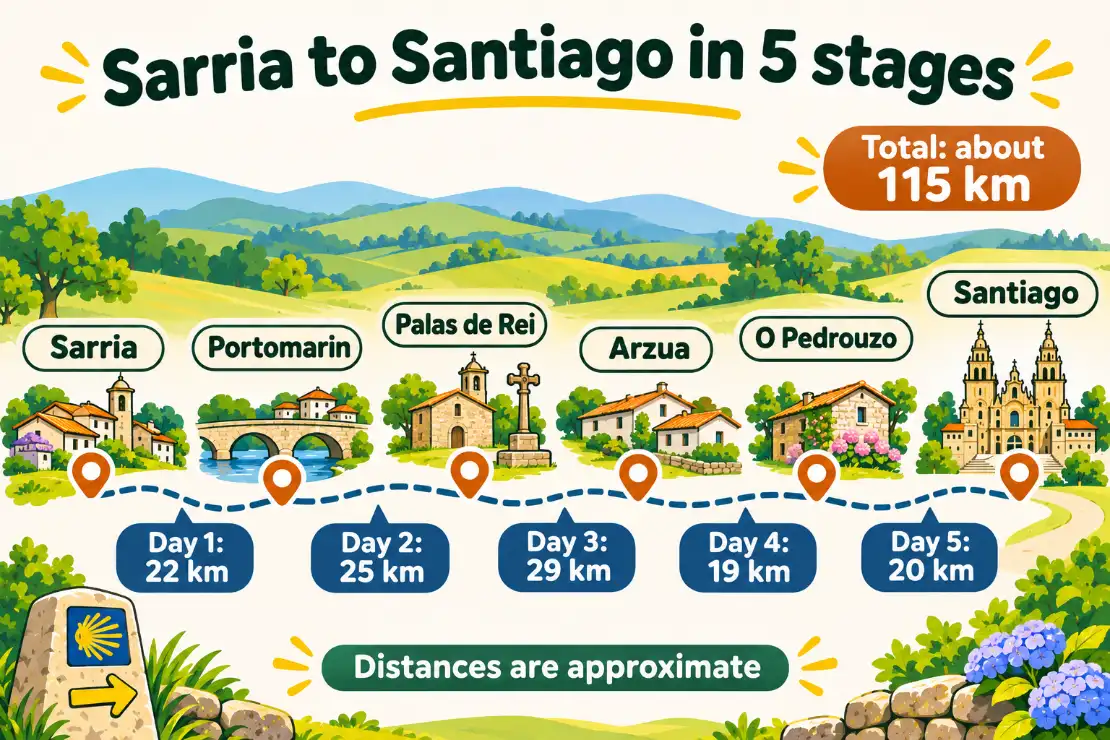
The classic plan splits Sarria to Santiago into 5 walking days of about 19 to 30 km. Distances below are approximate and vary by 1 to 2 km between guides, depending on where you sleep in each town.
| Day | Stage | Distance | Character |
|---|---|---|---|
| 1 | Sarria to Portomarín | about 21 to 22 km | Forest paths and hamlets, passing the 100 km marker; steep descent to the Miño river |
| 2 | Portomarín to Palas de Rei | about 25 to 27 km | Long climb out of Portomarín, then rolling farmland |
| 3 | Palas de Rei to Arzúa | about 28 to 30 km | The longest day; lunch stop in Melide |
| 4 | Arzúa to O Pedrouzo | about 19 to 20 km | Eucalyptus woods, gentle ups and downs |
| 5 | O Pedrouzo to Santiago | about 20 km | Monte do Gozo, first view of the cathedral, arrival in the Praza do Obradoiro |
Add an arrival night in Sarria before day 1 and at least one night in Santiago at the end, so the full trip takes about 7 nights.
An easier plan: Sarria to Santiago in 6 days
If 25 to 30 km days sound like too much, split the long third stage at Melide. You walk 6 days of about 14 to 26 km instead of 5, which suits first-timers, older walkers and anyone who wants time to enjoy the villages.
- Sarria to Portomarín, about 22 km
- Portomarín to Palas de Rei, about 25 km
- Palas de Rei to Melide, about 14 to 15 km
- Melide to Arzúa, about 14 km
- Arzúa to O Pedrouzo, about 19 to 20 km
- O Pedrouzo to Santiago, about 20 km
Tour companies offer even gentler 7- and 8-day versions with stages of 10 to 19 km. Before you choose, check how your legs feel about repeated 20 km days with our Camino fitness quiz.
What you will see on each stage
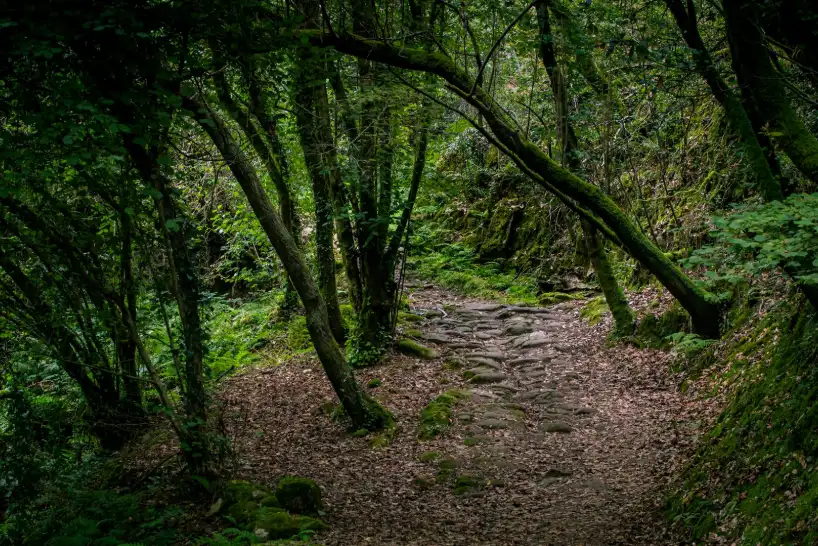
The last 100 km of the French Way crosses rural Galicia: stone villages, oak and chestnut woods, small Romanesque churches and dairy farms. Each day has a few landmarks worth slowing down for.
Day 1: Sarria to Portomarín
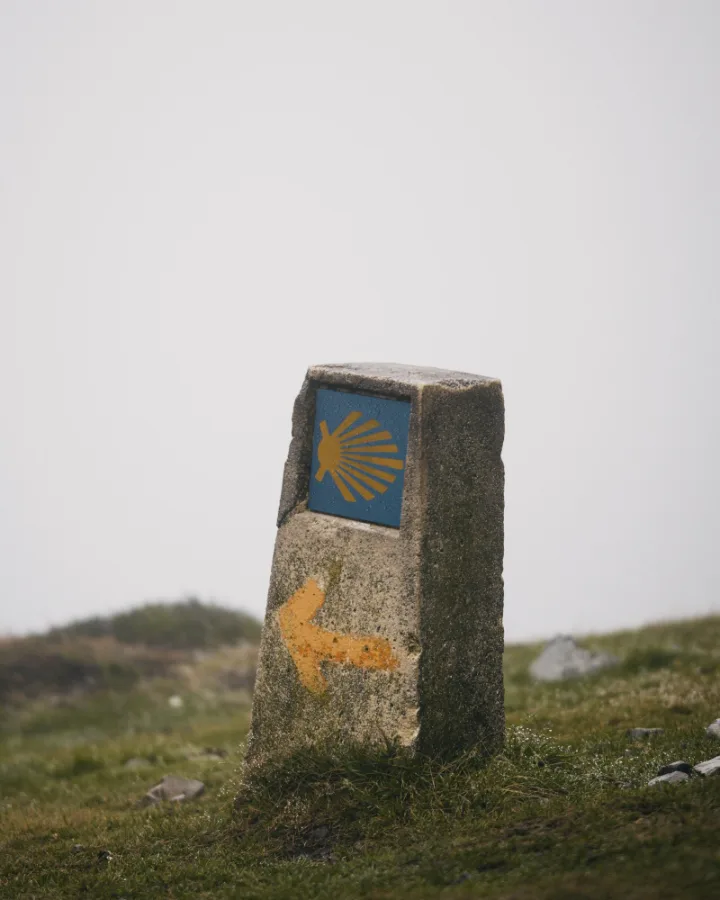
Sarria’s old town climbs a hill past churches and a monastery before the path drops into woods. Partway through the stage you pass the famous 100 km stone marker, covered in pilgrims’ messages. The stage ends by crossing a high bridge over the Miño reservoir into Portomarín, whose Romanesque church of San Nicolás was moved stone by stone when the old town was flooded.
Day 2: Portomarín to Palas de Rei
The day starts with a long climb, then follows quiet roads and paths past the Romanesque churches of Castromaior and Eirexe. Palas de Rei is a small town with plenty of albergues and a public pilgrim hostel.
Day 3: Palas de Rei to Arzúa
The longest stage passes through Melide, famous for pulpo a la gallega, boiled octopus with paprika and olive oil served on wooden plates. In Melide the Primitive Way joins the French Way, so the path gets busier. Arzúa is known for its soft, mild Arzúa-Ulloa cheese.
Day 4: Arzúa to O Pedrouzo
A shorter day through eucalyptus woods and small hamlets. Stock up in O Pedrouzo: the next villages have few shops or ATMs.
Pilgrim tip. In Melide, stop for pulpo a la gallega. It is the most famous lunch on the whole French Way.
Day 5: O Pedrouzo to Santiago
The final day passes the airport and climbs to Monte do Gozo, the “hill of joy”, where pilgrims traditionally get their first glimpse of the cathedral spires. From there it is about 5 km through the city to the Praza do Obradoiro in front of the cathedral.
How to get to Sarria
Most pilgrims reach Sarria by train or bus from Santiago de Compostela, A Coruña, Madrid or Lugo. Sarria has its own railway station, and there are regular buses from Lugo, the nearest city.
- Flying from the US or the UK: fly into Santiago de Compostela or A Coruña for the shortest transfer, or into Madrid and continue by train.
- From Santiago: go by train or bus, usually via Lugo or Ourense, and allow most of a day for the journey.
- Private transfer: taxis and shuttle companies drive from Santiago to Sarria in under two hours.
Spend the night before your first stage in Sarria. Get your credencial (pilgrim passport) there if you do not have one: churches and albergues in Sarria issue them.
Getting the Compostela from Sarria
Starting in Sarria qualifies you for the Compostela, as long as your credencial shows a continuous walk to Santiago. Collect at least two stamps a day, for example at your albergue and at a café or church on the way, because the last 100 km is where the office checks most carefully.
In Santiago, collect the certificate at the Pilgrim’s Reception Office on Rúa Carretas. Take a QR ticket for the queue; the office is open every day from 10:00 to 19:00, except 25 December and 1 January. The Compostela is free, and the optional Certificate of Distance costs 3 euros.
Two stamps a day. Over the last 100 km, stamp your credencial at least twice a day, for example at your albergue and at a café or church.
Is Sarria to Santiago a “real” Camino?
Yes. The last 100 km is the minimum the Church and the Pilgrim’s Reception Office recognize for the Compostela, and walking it with a credencial makes you a pilgrim like any other. Some long-distance walkers joke about the “Sarria crowd”, but the route, the markers and the arrival in Santiago are the same for everyone.
What changes is the atmosphere. From Sarria onward the path gets much busier, with school groups, tour groups and pilgrims with luggage transfer. If you want solitude, walk early in the morning, choose April, May or October, or consider a quieter 100 km option such as the English Way from Ferrol. Our comparison of Camino routes lists the one-week alternatives.
When is the best time to walk from Sarria?
May, June, September and early October offer the best balance of weather and crowds. Galicia is green because it rains a lot, so pack rain gear in every season.
- July and August: warm, the busiest weeks of the year; book beds ahead.
- April and October: fewer people, cooler, more rain.
- November to March: quiet and often wet; some private albergues close, but the public network stays open.
- 2027: a Holy Year, so expect more pilgrims than usual on this stretch, especially in summer.
How much does Sarria to Santiago cost?
A self-guided walk from Sarria to Santiago costs about 200 to 600 euros per person for 6 nights, not counting travel to Sarria. The main difference is where you sleep.
| Item | Budget style | Comfortable style |
|---|---|---|
| Accommodation | Public albergues, 10 euros a night: about 60 euros | Private albergues and pensiones: about 150 to 300 euros |
| Food | Supermarket and pilgrim menus: about 120 euros | Cafés and restaurants: about 180 to 240 euros |
| Extras | Credencial, laundry: about 15 euros | Luggage transfer at about 6 to 8 euros a stage: about 40 euros |
| Total | about 200 euros | about 370 to 580 euros |
Prices are 2026 ranges from American Pilgrims on the Camino and Camino guides; a fully organized tour with hotels and transfers costs more. For a detailed daily breakdown, see how much the Camino de Santiago costs.
Practical tips for the last 100 km
The last 100 km is the busiest part of any Camino, so a little timing and booking goes a long way.
- Start walking by 7:30 or 8:00 to beat groups and afternoon heat.
- In public albergues beds go in order of arrival, so arrive by early afternoon in summer.
- Book your nights in Portomarín, Palas de Rei and Santiago from June to September.
- Attend the Pilgrims’ Mass at the cathedral, and add the walk to Finisterre or Muxía if you have extra days.
- Pack light: check your bag with our Camino packing list for first-timers.