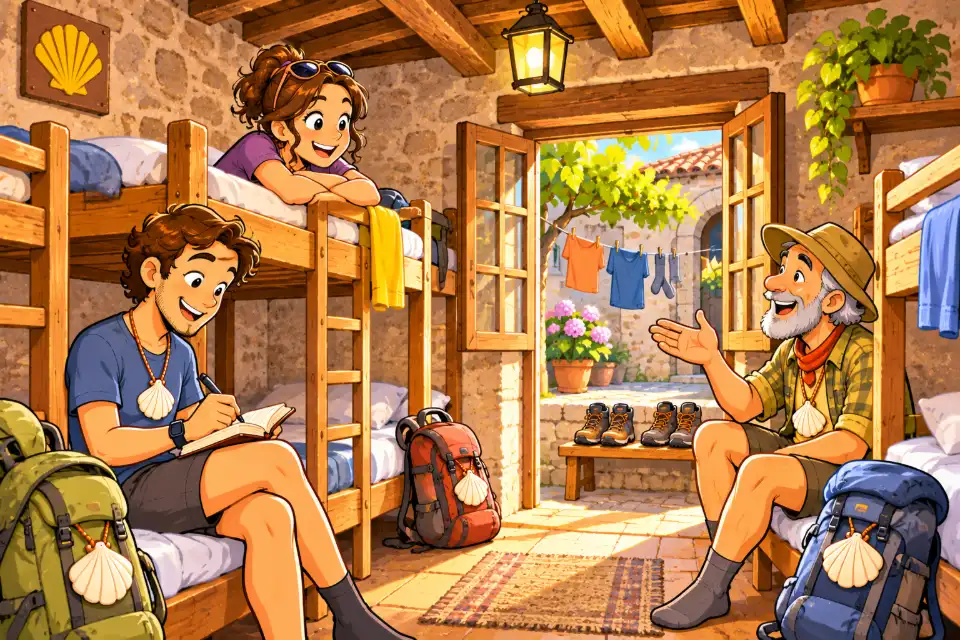
On the Camino de Santiago you sleep either in albergues or in private rooms. Albergues are pilgrim hostels with shared bunk rooms for about 10 to 25 euros a night; pensiones, guesthouses and hotels start at about 35 euros. Public albergues cannot be booked and work on a first come, first served basis, while private albergues and hotels take reservations.
This guide explains each type of accommodation along the Camino, what a night in an albergue is really like, when you should book ahead and how to mix budget and comfort on one walk.
Types of Camino accommodation compared
Camino accommodation falls into five groups, from the 10 euro public albergue to historic parador hotels. The right mix depends on your budget, how well you sleep in a shared room and whether you want to plan each night in advance.
| Type | Room | Price per night | Bookable | Takes luggage transfer |
|---|---|---|---|---|
| Public albergue (municipal, Xunta de Galicia) | Shared dorm | 7 to 14 euros; 10 euros in Galicia | No | No |
| Parish or donativo albergue | Shared dorm | Donation | No | No |
| Private albergue | Dorm, some private rooms | 14 to 25 euros | Mostly yes | Mostly yes |
| Hostal or pensión | Private room | 35 to 70 euros | Yes | Yes |
| Casa rural (rural guesthouse) | Private room, often private bath | 55 to 150 euros | Yes | Yes |
| Hotel | Private room | 65 to 180 euros | Yes | Yes |
| Parador (historic state hotel) | Private room | 200 to 250 euros, pilgrim discount | Yes | Yes |
Price ranges and booking rules follow the 2026 guidance of American Pilgrims on the Camino. Prices rise in towns on the last 100 km and in July and August.
What is an albergue?
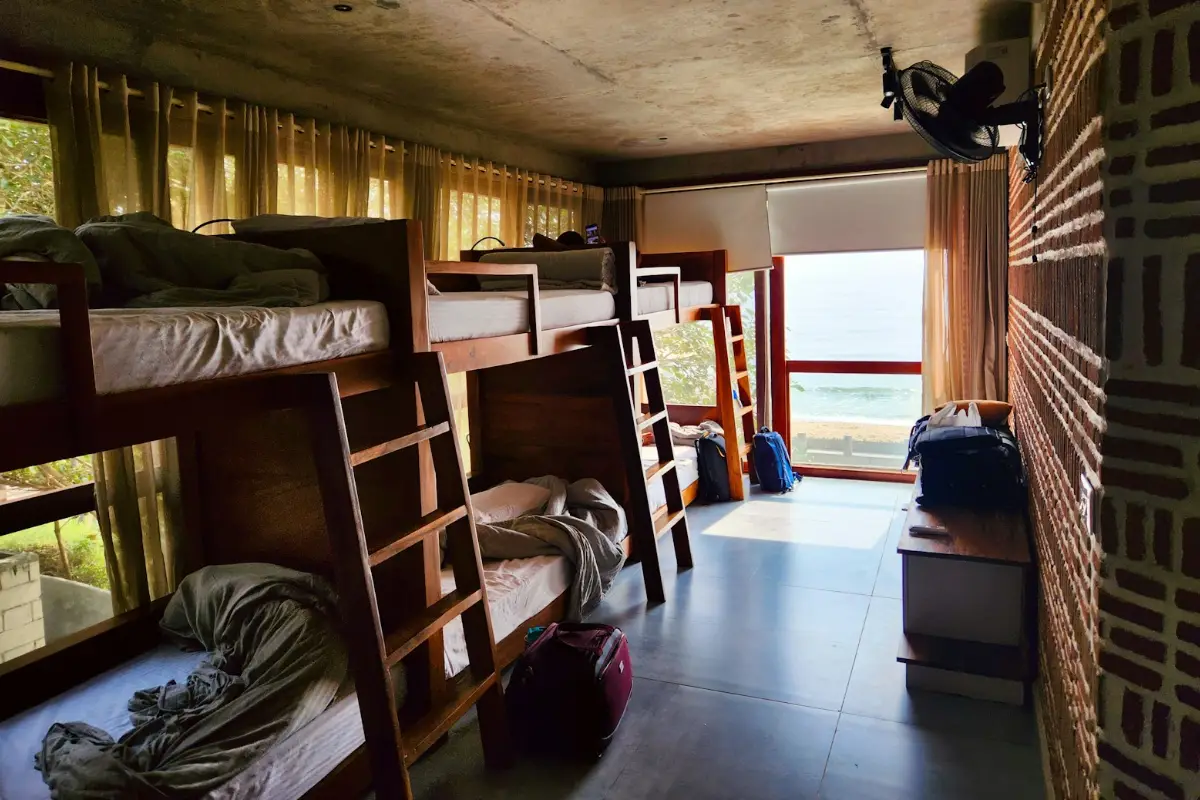
An albergue is a hostel reserved for pilgrims who walk, cycle or ride the Camino and carry a credencial (pilgrim passport). You sleep in a bunk in a shared room, usually mixed. Bathrooms, a laundry sink and often a kitchen are shared too.
Albergues are the heart of the traditional Camino. They are cheap, social and placed exactly where a day’s walk ends, and you will meet the same pilgrims again and again. Expect simple comfort: bunk beds, a disposable sheet, hot showers and a few plugs that everyone wants at the same time.
You need to show your credencial at check-in, and the host stamps it. Spanish law requires lodgings to register guests, so you will also give your passport details; some albergues let you pre-register online with a QR code.
Public albergues: the Xunta de Galicia network
Galicia, the region where every route ends, runs the largest network of public albergues on the Camino. The regional government, the Xunta de Galicia, lists them by route on its official Camino portal. The network was created in 1993 and now has about 75 albergues with more than 3,000 beds.
The Galician albergue guide Albergues Camino Santiago published the network’s rules in 2024 and 2025. They are simple:
- Price: 10 euros a night on every route, all year.
- No reservations: beds go in order of arrival, with priority for walkers and people with reduced mobility, then pilgrims on horseback, then cyclists, then pilgrims with a support vehicle.
- One night only, unless you are ill or there is force majeure.
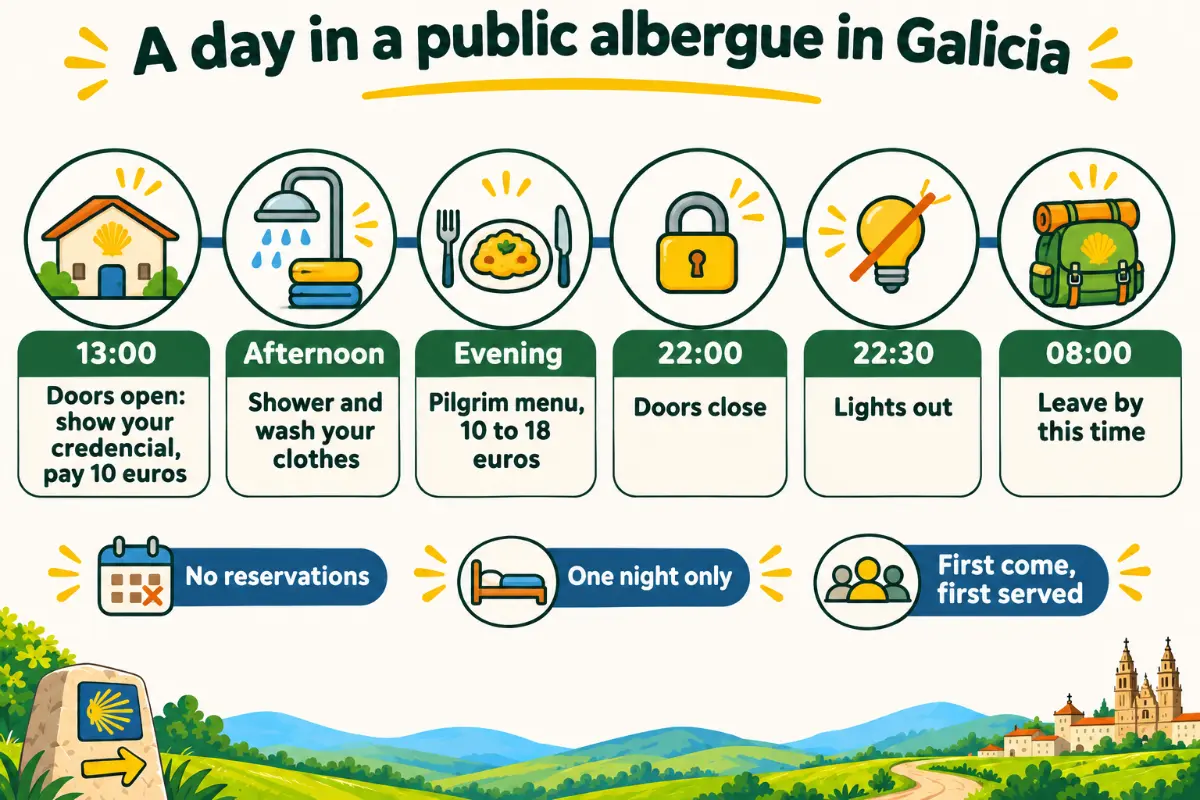
- Hours: doors open at 13:00 and close at 22:00, lights out at 22:30, and you leave by 08:00.
- Services: hot showers, disposable bed linen and a kitchen, usually without pots or cutlery.
No bookings in public albergues. Beds go in order of arrival. In summer, arrive by early afternoon on the last 100 km.
Outside Galicia, municipal albergues are run by town councils and charge about 7 to 14 euros, with similar rules. Parish albergues are often donativo: you pay what you can, and many offer a shared dinner.
Private albergues: the middle ground
Private albergues cost a little more, about 14 to 25 euros a night, but you can book them and they usually offer more comfort. Expect smaller dorms, blankets, washing machines and dryers, a bar or a pilgrim dinner, and later opening hours.
Many private albergues also have a few private double rooms at a fraction of hotel prices. They accept bags from luggage transfer services, which public albergues do not, and some accept card payments.
Private rooms: pensiones, casas rurales and hotels
A private room costs from about 35 euros for a simple hostal or pensión to 180 euros for a comfortable hotel. It is the best choice if you sleep badly in shared rooms, walk as a couple or want a quiet night every few days.
- Hostal or pensión: a small family-run guesthouse, usually with a private bathroom, 35 to 70 euros.
- Casa rural: a country house, often a restored farmhouse with breakfast and sometimes dinner, 55 to 150 euros.
- Hotel: 65 to 180 euros, breakfast usually available.
- Parador: a state-run hotel in a historic building. The one in Santiago, beside the cathedral, began as a pilgrim hospital founded in 1499, and paradors give a discount to pilgrims with a credencial.
What a night in an albergue looks like
A typical albergue day follows the same rhythm everywhere: arrive early afternoon, shower, wash clothes, eat, sleep early and leave early. Knowing the routine makes the first night much easier.
- Arrive between 13:00 and 16:00. Show your credencial and passport, pay and get your stamp.
- Choose a bunk, leave your boots in the boot room and shower before the queue.
- Wash your clothes in the sink and hang them out to dry.
- Eat a pilgrim menu in a bar, usually 10 to 18 euros, or cook in the albergue kitchen.
- Sleep by 22:00. Lights go out at 22:00 or 22:30.
- Leave by 08:00. Many pilgrims start walking at sunrise.
Earplugs, an eye mask and a headlamp make shared rooms far easier. Mixed dorms are the norm; bathrooms are often separated by gender. Not sure whether this is your kind of trip? Our pilgrim personality quiz asks exactly how you feel about a room with 30 strangers.
Should you book Camino accommodation in advance?
You should book ahead in the busy months on the busiest stretches, and you can usually walk albergue to albergue the rest of the time. The answer depends on the season, the route and how much flexibility you want.
| Situation | Our advice |
|---|---|
| May to October on the last 100 km of the French or Portuguese Way | Book at least the first nights and the night in Santiago |
| 2027 Holy Year | Book earlier than usual, especially in summer |
| You need a private room or travel as a couple | Book a few days ahead as you walk |
| Spring or autumn on quieter routes | Walk without bookings, but check the next town has beds |
| November to March | Check which albergues are open; many close in winter |
The pressure is real on the final stretch: 31% of all pilgrims started in Sarria in 2025, according to American Pilgrims on the Camino, so towns such as Portomarín and Palas de Rei fill quickly in summer.
Pilgrim tip. Book the night in Santiago in advance in any season. It is the one night almost every pilgrim needs.
How to book albergues and rooms
Private albergues and rooms can be booked on the usual hotel platforms, by phone, by WhatsApp or by email. Small hosts often prefer a WhatsApp message and ask you to arrive by a set time, usually mid-afternoon.
- Cancel if your plans change; no-shows leave beds empty for other pilgrims.
- Carry cash. Many albergues and some pensiones do not take cards.
- Bring an EU plug adapter (type C) and charge your phone when you arrive, before the plugs run out.
- Use a Camino app or the Xunta portal to check opening dates in spring, autumn and winter.
How much will accommodation cost for the whole walk?
Accommodation is usually the biggest daily cost on the Camino. Here is a simple example for the 5 nights from Sarria to Santiago, based on the price ranges above.
| Style | Per night | 5 nights |
|---|---|---|
| Public albergues only | 10 euros | 50 euros |
| Private albergues | 14 to 25 euros | 70 to 125 euros |
| Mix: 3 albergues and 2 pensiones | about 10 to 70 euros | about 100 to 215 euros |
| Pensiones and hotels | 35 to 180 euros | 175 to 900 euros |
A mix is what many first-timers end up choosing: albergues for the atmosphere and a private room every third or fourth night to rest. For the full daily budget, including food, see our guide to how much the Camino de Santiago costs.
Tips for a good night’s sleep in albergues
A few simple habits make shared rooms quieter for everyone.
- Pack your bag the evening before so you can leave quietly in the morning.
- Keep plastic bags to a minimum; their rustle at 6 a.m. wakes the whole room.
- Check your bunk for bedbugs and keep your pack off the bed.
- Keep valuables with you, even in the shower.
Make sure your sleeping bag or liner is on your list with our Camino packing list for first-timers, and read the beginner’s guide to the Camino de Santiago if you are still planning the basics.